Dental Admission in India 2026: Complete Guide to Eligibility, Fees & Top Colleges
Dear Aspiring ,
Every year, thousands of aspiring clinicians face a crossroads—pursue medicine or dentistry. While the spotlight often falls on MBBS in India, the Bachelor of Dental Surgery (BDS) holds its own as a rigorous, rewarding, and deeply specialized healthcare degree. For professionals seeking clinical autonomy early in their careers, BDS delivers something few other programs can: the ability to diagnose, treat, and manage patients independently within just five years of training. Students exploring Dental Admission in India will find that BDS offers a structured and highly respected pathway into the healthcare sector, with growing demand for qualified dental surgeons across both urban and rural regions of the country.
This course overview breaks down everything healthcare professionals and prospective students need to know about BDS — from its academic structure to career trajectories and the evolving role of dental surgeons in India. Many students and their families these days are also exploring top 10 Private Dental Colleges in India because these colleges offer good infrastructure, experienced teachers, and plenty of patient interaction from the early years of the course itself, which makes a real difference when students step out into their professional life after graduation.
Understanding BDS: More Than Just Teeth
The Bachelor of Dental Surgery is a five-year undergraduate program that includes four years of academic and clinical coursework followed by a one-year compulsory rotating internship. Recognized by the Dental Council of India and approved under the purview of the National Medical Commission framework, BDS trains students to become fully licensed dental surgeons capable of independent practice.
Unlike common perception, BDS extends well beyond routine dental procedures. The curriculum covers oral pathology, periodontics, orthodontics, prosthodontics, pediatric dentistry, oral and maxillofacial surgery, and community dentistry. Students develop competence in identifying systemic diseases that manifest in the oral cavity—diabetes, autoimmune disorders, and even certain malignancies. For students who are seriously thinking about Dental Admission in India, understanding the full scope of what BDS covers is really important because it is not just about teeth — it is a complete clinical program that prepares you for a wide range of patient care situations right from your college years.
For healthcare professionals evaluating this pathway, BDS represents a clinical degree with strong diagnostic foundations. Graduates emerge with hands-on surgical skills that many other undergraduate healthcare programs do not offer at the same stage.
Who Should Consider BDS?
BDS appeals to a specific kind of healthcare aspirant—someone who values procedural skill, patient interaction, and entrepreneurial flexibility. Students who qualify through NEET UG and secure Dental admission in India enter a field that blends medical science with fine motor precision and aesthetic judgment.
The program suits individuals who want direct clinical responsibility from an early career stage. Unlike several allied health sciences, BDS graduates hold prescribing authority, perform surgical interventions, and manage treatment plans autonomously. This clinical independence, available immediately after completing the internship, makes BDS uniquely attractive.
Healthcare professionals working in adjacent fields often recommend BDS to mentees because of its balanced combination of intellectual challenge and practical application. The degree opens doors to academic careers, research roles, hospital-based positions, and private practice ownership.
The Academic Structure: What Five Years Look Like
The BDS in India curriculum follows a progressive model. The first year focuses on foundational sciences — anatomy, physiology, biochemistry, and dental materials. This phase mirrors the early semesters of Dental Colleges in India , giving dental students a strong biomedical foundation that supports clinical reasoning throughout their careers.
The second and third years introduce students to preclinical and paraclinical subjects. Courses in general pathology, microbiology, pharmacology, and oral pathology build the bridge between basic science and clinical application. Students begin working with dental mannequins and laboratory simulations before advancing to supervised patient care.
The final academic year immerses students in clinical specialties—conservative dentistry, oral surgery, prosthodontics, orthodontics, pedodontics, and community dentistry. Students treat real patients in dental college hospitals, gaining exposure to diverse clinical scenarios under faculty supervision.
The compulsory internship year consolidates this training. Interns rotate through all major departments, manage patient caseloads, and assist in complex procedures. By the time they receive their degree, BDS graduates have logged hundreds of clinical hours and performed numerous procedures independently.
Dental Admission in India: Navigating the Process
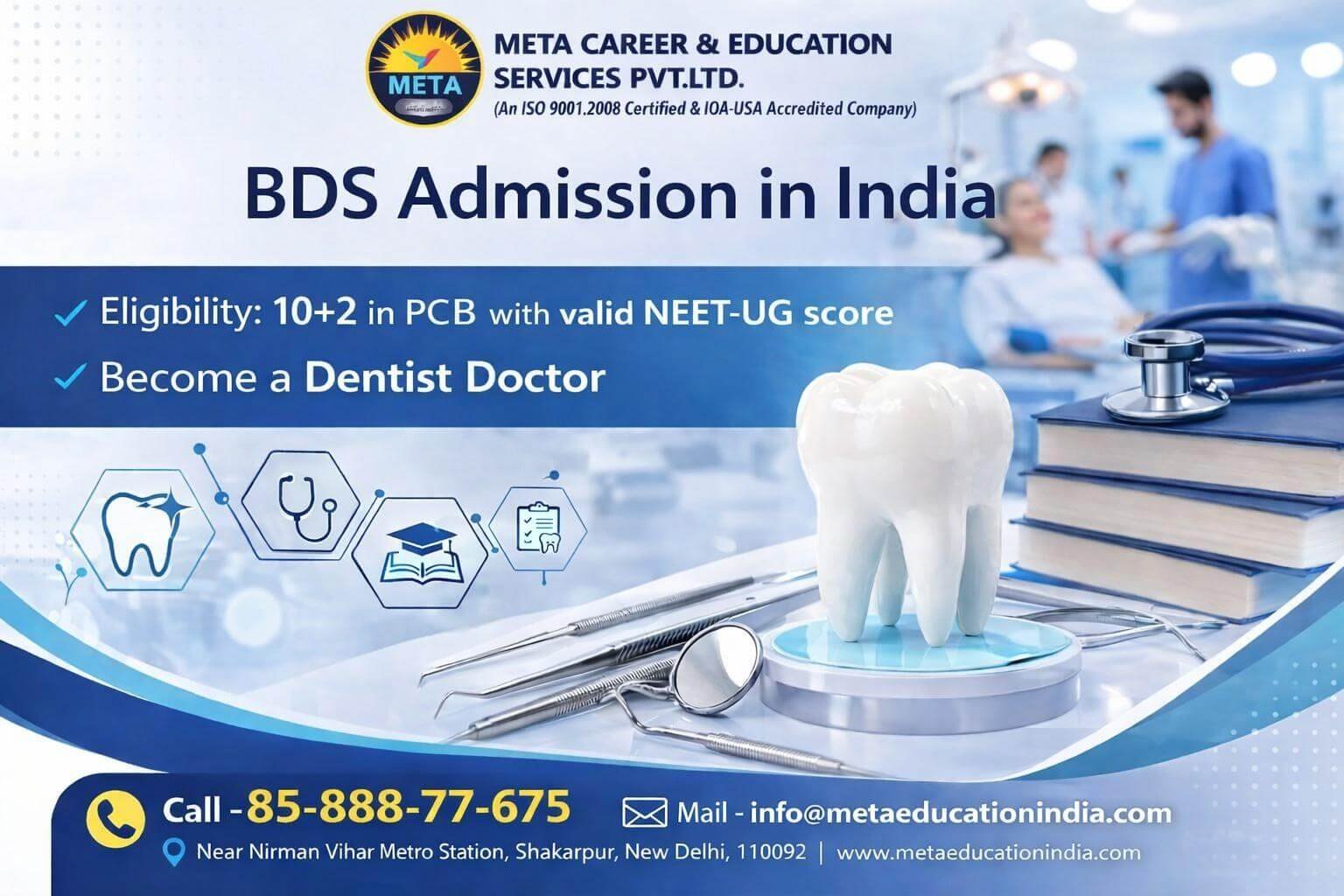
Securing a Dental Admission in India requires clearing the National Eligibility cum Entrance Test (NEET UG), the single gateway examination for all undergraduate medical and dental programs in the country. Candidates must score competitively, though BDS cut offs typically sit below MBBS thresholds, making it accessible to a broader range of qualified students.
The counseling process operates through centralized bodies—the Medical Counselling Committee handles all India Quota seats, while state-level counseling authorities manage state quota admissions. Students can choose from government colleges, private institutions, and deemed universities, each carrying different fee structures and clinical exposure standards.
Understanding Dental admission fees in India provides useful context here. Government medical college fees often range modestly, but private BDS seats can demand substantial investment. BDS programs at government colleges remain significantly more affordable, and even private BDS fees tend to fall well below private BDS tuition. This cost differential makes BDS a financially strategic choice for families seeking quality medical education without excessive financial burden.
Documentation requirements include the NEET scorecard, Class XII mark sheets, and category certificates where applicable. Prospective students should track counselling schedules closely, as seat allotment rounds move quickly and missing deadlines can cost valuable opportunities.
BDS Colleges Fees in india
Dental Colleges Fees in india is divided into two types of Dental Colleges Fees Like- Government Dental Colleges Fees in India, which start from 10000 Rupees to 40000 Rupees Yearly.
Dental Colleges Fees in India for Privates Colleges begins from 200,000 rupees to 1,000,000 rupees yearly. It varies from college to college. For more details about Dental Colleges Fees in India, Kindly book an appointment with our team; we shall provide information as per admission seat requirements.
Choosing the Right Institution: What Matters Most
Selecting a college shapes the entire BDS experience. The best Dental colleges in India distinguish themselves through robust clinical infrastructure, experienced faculty, high patient footfall in attached hospitals, and strong placement records. Institutions with well-equipped simulation laboratories, digital dentistry facilities, and active research programs offer students a measurably superior training environment.
When evaluating options, healthcare professionals advising students should look beyond rankings alone. Daily patient volume in the college hospital matters enormously—a busy dental hospital ensures students gain exposure to diverse conditions. Faculty-to-student ratio and availability of advanced imaging equipment also signal institutional quality.
Top Dental colleges in India include both legacy government institutions and select private universities that have invested heavily in clinical training infrastructure. Colleges in metropolitan areas often offer higher patient diversity, while institutions in smaller cities may provide more individualized mentorship.
Students should also investigate internship placement quality. Some colleges facilitate rotations at external hospitals and community health programs, broadening the clinical perspective beyond the parent institution.
Best Private and Government Dental College in India
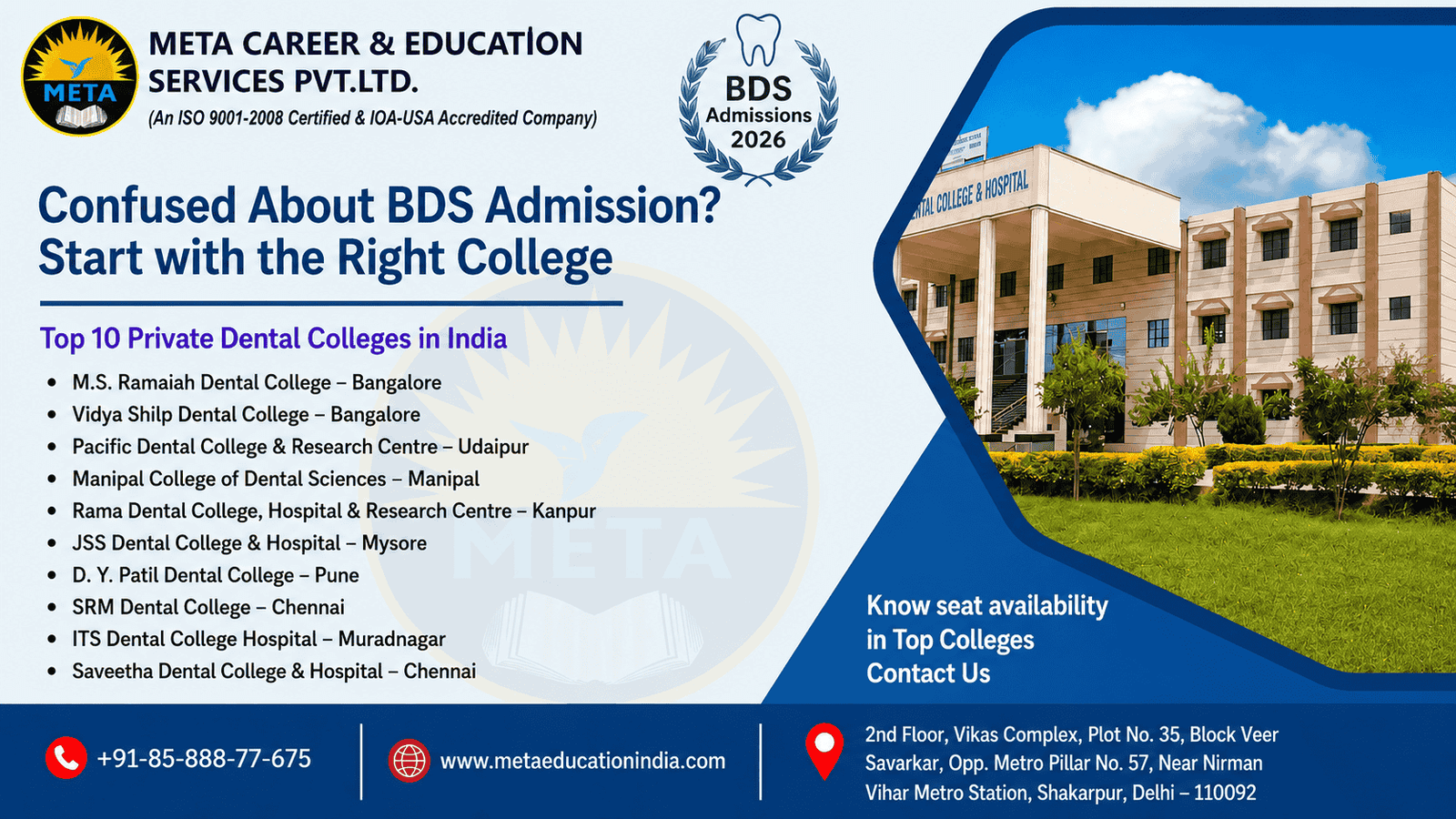
Top 10 Private Dental colleges in India
| S. No. | Name of College | Location |
|---|---|---|
| 1 | M.S. Ramaiah Dental College | Bangalore |
| 2 | Vidyalaya Dental College | Bengalore |
| 3 | Pacific Dental college and research center | Udaipur |
| 4 | Manipal College of Dental Sciences, Manipal | Manipal |
| 5 | Rama Dental College, Hospital and Research Centre | Kanpur |
| 6 | JSS Dental College and Hospital | Mysore |
| 7 | D. Y Patel Dental collage | Pune |
| 8 | SRM Dental College | Chennai |
| 9 | ITS Dental College Hospital | Muradnagar |
| 10 | Saveetha Dental College and Hospital | Chennai |
Top 10 Government Dental Colleges in India
| S. No. | Name of College | Location |
|---|---|---|
| 1 | Maulana Azad institute of Dental sciences | New Delhi |
| 2 | KGMU Dental College | Lucknow |
| 3 | Post graduate institute of Dental College | Rohtak (Haryana) |
| 4 | Government Dental College and Hospital | Jaipur |
| 5 | ESIC Dental College and Hospital | Delhi |
| 6 | Dr. Harvansh singh judge institute of dental sciences & Hospital | Chandigarh |
| 7 | Dr. Ziauddin Ahmad Dental College | Aligarh |
| 8 | HP patel dental College | Shimla |
| 9 | Jamia millia islamia Dental College | New Delhi |
| 10 | Government Dental College | Bangalore |
Career Pathways After BDS: A Broader Map Than Expected
The post-BDS career landscape extends far beyond opening a private dental clinic, though that remains a viable path. Graduates can pursue MDS (Master of Dental Surgery) in over a dozen specialties, ranging from oral and maxillofacial surgery to orthodontics, endodontics, and public health dentistry.
Hospital-based careers offer another strong trajectory. Multi-specialty hospitals increasingly employ dental surgeons within integrated care teams, recognizing the connections between oral health and systemic conditions.
Academic careers attract those with research inclinations. Dental colleges across India face faculty shortages, and MDS-qualified professionals find teaching positions readily available. Research opportunities in biomaterials, implantology, and digital dentistry continue expanding.
Public health roles deserve particular attention. Government programs targeting oral health awareness and rural healthcare outreach depend heavily on BDS graduates. The National Oral Health Programme and various state-level initiatives create salaried positions with meaningful community impact.
Entrepreneurial graduates explore dental tourism, cosmetic dentistry practices, and tele-dentistry platforms. The profession rewards initiative, and BDS holders who combine clinical skill with business acumen build highly successful independent practices.
The Evolving Role of Dental Surgeons in Indian Healthcare
India’s oral health burden remains staggering. Dental caries, periodontal disease, oral cancers, and malocclusion affect hundreds of millions of people, yet the dentist-to-population ratio falls critically short of global benchmarks. This gap creates both a public health challenge and a professional opportunity.
Government investment in dental healthcare infrastructure continues growing. New dental colleges receive approval each year, district hospitals add dental units, and insurance schemes gradually expand oral health coverage. These developments strengthen demand for qualified dental surgeons across urban and rural settings.
The profession also benefits from technological advancement. Digital impression systems, CAD/CAM prosthetics, laser dentistry, and guided implant surgery have transformed clinical practice. BDS graduates entering the field today work with tools that deliver faster, more precise, and less invasive patient outcomes.
For healthcare professionals assessing the long-term viability of dental careers, the trajectory points firmly upward. Demographic shifts, increasing health awareness, expanding insurance coverage, and technological innovation collectively fuel sustained demand for skilled dental surgeons.
Financial Considerations: Investment Versus Return
Cost remains a decisive factor for many families. Comparing MBBS admission fees in India with BDS fees reveals a consistent pattern — dental education demands lower financial investment at nearly every tier. Government BDS seats offer exceptional value, often costing a fraction of private medical college tuition.
Return on investment materializes through multiple channels. Private practice earnings scale with skill, location, and specialization. Salaried positions in hospitals and academic institutions provide stability. Specialization through MDS amplifies earning potential significantly, with oral surgeons and orthodontists commanding premium compensation.
The relatively lower entry cost combined with strong earning potential across diverse career paths makes BDS one of the most financially efficient healthcare degrees available in India today.
Final Perspective-
Choosing BDS means choosing a career defined by precision, patient impact, and professional independence. The degree equips graduates with surgical competence, diagnostic acuity, and the clinical confidence to serve communities from day one. Whether your goal involves advanced specialization, hospital practice, academic contribution, or building a practice from the ground up, BDS provides the foundation to get there. Research the best Dental colleges in India thoroughly, prepare strategically for NEET, and take the first step toward a career that combines science, skill, and meaningful patient care every single day.