Kazan State Medical University: A Clear-Eyed Guide to Studying MBBS in Russia, Admission, Eligibility, and MBBS Fees
Every year, thousands of NEET-qualified students reach a hard crossroads: a government seat slips away by a handful of marks, and a private Indian college quotes a figure no ordinary family can absorb. Kazan State Medical University exists in the space between those two dead ends, and it has become one of the most discussed names for Indian students who want a recognised medical degree without a crippling price tag.
This overview explains what the university offers, who it suits, and the trade-offs you should consider before committing six years of your life to it.
What Kazan State Medical University Is
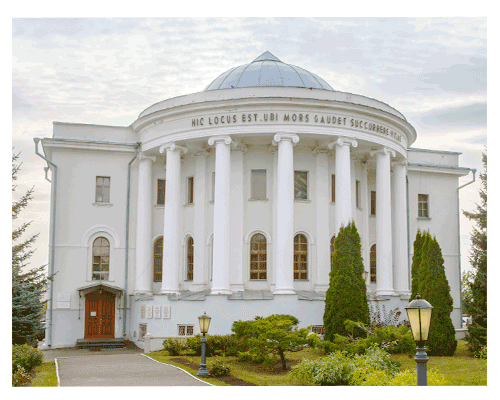
Kazan State Medical University, Kazan, opened its doors in 1814, which makes it one of the oldest medical schools in Russia and one of the oldest in continental Europe. It sits in Kazan, the capital of Tatarstan, a city often called the “third capital of Russia” for its size, history, and cultural weight.
The university runs as a public institution under Russia’s Ministry of Health. That status matters. Government funding usually translates into stable infrastructure, salaried faculty, and a teaching system that does not depend on aggressive fee hikes to survive. Over two centuries, the campus has trained tens of thousands of doctors who now practice across India, Europe, the Gulf, and North America.
Quick Snapshot
The table below puts the core facts in one place before we dig into the details.
Particular | Detail |
Established | 1814 |
Location | Kazan, Republic of Tatarstan, Russia |
Type | Government (public) medical university |
Affiliation | Ministry of Health, Russian Federation |
Flagship course | General Medicine (equivalent to Indian MBBS) |
Duration | 6 years |
Medium of instruction | English Medium |
Intake | September |
Recognition | NMC (India), WHO, listed on WDOMS. |
Graduates trained | 30,000+ over its history |
Indian students | 1,500+ (most recent counts) |
Source countries | Around 50 |
Faculty-to-student ratio | Approx 1:10 |
Admission Process starts May/June Every year
Standing within Russia | Regularly ranked among the top 10 medical universities |
Clinical training | Conducted in affiliated teaching hospitals from the later years |
Reported FMGE pass rate | Around the low 60s percent in a recent cited year |
These figures are reference points, not guarantees. Rankings shift annually, and student counts move year to year, so use them to compare options rather than as fixed promises.
The Course at a Glance
The flagship program for international students is General Medicine, the Russian equivalent of the Indian MBBS. The degree runs for six years, and the university teaches it in English, with Russian language training built into the early semesters so you can talk to patients during clinical rotations.
The structure follows a familiar medical arc. The first years cover the foundations: anatomy, physiology, biochemistry, and histology. The middle years move into pathology, pharmacology, microbiology, and the mechanics of disease. The final years push you into wards and clinics, where you handle real patients under supervision across general medicine, surgery, pediatrics, obstetrics, and other core specialties.
By the time you graduate, you hold a degree that the National Medical Commission and the World Health Organization both recognise. Kazan State Medical University Kazan, appears on the World Directory of Medical Schools, which is the listing the NMC checks before it lets any foreign graduate sit the licensing exam back home.
MBBS in Kazan State Medical University: Eligibility You Must Meet
The entry rules follow current NMC guidelines, so they will feel familiar if you have already navigated the Indian admission maze.
You need to have cleared Class 12 with Physics, Chemistry, and Biology, generally with at least 50 percent in those subjects for the general category and 40 percent for reserved categories. You must have qualified for NEET, and your score stays valid for the year you sit it plus the two years before. You also need to be at least 17 years old by the end of the admission year.
Requirement | Criterion |
Academic | Class 12 with Physics, Chemistry, Biology |
Minimum marks (general) | 50% in PCB |
Minimum marks (reserved) | 40% in PCB |
Entrance exam | NEET qualified (valid for the current year plus two prior years) |
Age | At least 17 years by 31 December of the admission year |
A qualified NEET result is non-negotiable. Without it, even a confirmed MBBS seat in Russia leaves you unable to ever practice in India, so treat that score as the foundation of the whole plan.
What MBBS in Kazan State Medical University Costs
Now the question every family asks first The Kazan State Medical University MBBS fees are the main reason Indian students look here in the first place, and the numbers tell a clear story when you set them against private colleges back home.
Annual tuition sits in the region of 600,000 Russian roubles, which works out to roughly six lakh rupees a year at recent exchange rates, with many packages folding hostel accommodation into that figure. Across the full six years, the realistic all-in cost, including living expenses, tends to land well below what a single year at many private Indian medical colleges now demands.
| Cost head | Indicative figure |
| Annual tuition | ~636,000 RUB (≈ ₹6.50 lakh per year) |
| Hostel | ~₹30,000–40,000 Ruble |
| Capitation/donation | None |
| Currency basis | Rupee value moves with the RUB/USD exchange rate |
For more information, contact us
A word of caution here, because this is where students get misled. Different agents quote wildly different totals for the same university, and currency swings move the rupee figure month to month. Treat any single number you read online, including this one, as a starting reference and confirm the current Kazan State Medical University MBBS fees directly with the university or a verified representative before you transfer a single rupee.
Living costs add a modest layer on top. Most students budget somewhere around ten to fifteen thousand rupees a month for food and personal expenses, and Kazan offers Indian mess options near campus that ease the transition for vegetarian and home-food eaters.
How the Admission Process Works
The application runs largely online, which spares you a guessing game of paperwork and middlemen. You submit scanned documents, the university reviews them, and an admission letter typically follows within a couple of weeks if everything is in order.
The cycle moves through the year on a predictable rhythm.
Stage | Typical timing |
Applications open | Around early summer |
Admission letter | Usually within a couple of weeks of a complete application |
Invitation and visa processing | Through the warmer months |
Classes begin | September intake |
Apply early rather than late, because seats for the English-medium programme fill, and a rushed visa timeline is the most common reason a confirmed student misses the start of term.
Life as a Student in Kazan
The city earns its reputation as one of the safer and more welcoming places in Russia for international students. A large, established Indian community already studies here, which softens the early loneliness most students feel when they land in a foreign country for the first time.
The university provides hostel accommodation, and the campus runs the usual mix of laboratories, libraries, and teaching hospitals that give you hands-on exposure rather than textbook-only learning. Kazan itself is a working, modern city with public transport, markets, and a student culture that does not leave you stranded.
Winters are long and genuinely cold, and that catches many Indian students off guard. You adapt, but go in expecting it rather than romanticising the experience.
The FMGE Reality You Should Not Ignore
Here is the part many promotional pages bury, and you deserve to read it plainly. A Russian MBBS degree does not let you practise in India by itself. You must clear the Foreign Medical Graduate Examination, which the National Exit Test will eventually replace.
National pass rates for the FMGE across all foreign graduates have historically stayed low, often hovering well under half of those who attempt it. Kazan’s own reported pass rate in recent years has sat in a similar range, around the low thirties in percentage terms in one widely cited year. That figure is not a reason to panic, but it is a reason to plan.
What separates the students who clear it from those who do not is rarely the university. It is consistent self-study, early FMGE-focused preparation, and refusing to coast through clinical years. Choose Kazan for its teaching and recognition, then own your own preparation, because the licence is earned in your study hours, not handed over with the degree.
Why Students Keep Choosing Kazan Medical University
Set the warnings aside for a moment and the appeal becomes clear. Kazan Medical University combines genuine age and credibility, NMC and WHO recognition, English-medium teaching, and a cost structure that puts a medical career within reach of middle-class families.
The clinical exposure runs deep because the university ties into established teaching hospitals, and you train on real cases rather than simulations alone. The faculty carry strong academic credentials, and the teaching-hospital network gives you the bedside hours that build actual competence.
For students who want a recognised degree, a structured curriculum, and a city that treats international students well, the combination is hard to match at this price point.
Making the Decision
Studying MBBS in Kazan State Medical University is a serious six-year commitment, not a quick fix for a missed NEET cutoff. The university gives you a credible, recognised, affordable platform. What you build on that platform ultimately depends on the discipline and effort you bring to it.
If the numbers, the recognition, and the honest trade-offs in this overview match what you are looking for, take the next step properly: verify the current fees, confirm your NEET eligibility, and speak to a trusted advisor before you apply, so your decision rests on facts rather than glossy promises.
Frequently Asked Questions
Yes. The university is recognised by the National Medical Commission of India and the World Health Organization, and it appears on the World Directory of Medical Schools. That recognition is what makes your degree valid for the Indian licensing exam once you return.
The General Medicine programme runs for six years and includes both classroom learning and supervised clinical training in affiliated hospitals. You move from foundational sciences in the early years to hands-on patient work in the final ones.
Annual tuition sits in the region of 600,000 Russian roubles, roughly six lakh rupees a year at recent exchange rates, with many packages including hostel accommodation. Currency movement and agent quotes vary the totals, so always confirm the latest Kazan State Medical University MBBS fees directly before paying.
Yes. International students study the General Medicine course in English, while early Russian language classes prepare you to communicate with patients during clinical rotations.
Reported pass rates have hovered in the low thirties in percentage terms in recent years, broadly in line with the national average for foreign medical graduates. Strong, early, self-driven preparation is what lifts a candidate above that figure.
Kazan is widely regarded as one of the safer and more welcoming Russian cities for international students, with a large, settled Indian community and hostels that maintain round-the-clock security.
The main intake starts in September. Applications generally open in early summer, so apply early to leave room for document processing and visa timelines rather than racing the deadline.
Yes. The university provides hostel accommodation, and Indian mess and food options near campus make daily life easier for students who prefer home-style or vegetarian meals.
Yes, but only after you clear the screening exam, currently the FMGE and, in time, the National Exit Test. The degree qualifies you to sit for that exam; passing it is what grants the license to practice.